Zip-Track vs Manual Patio Screens for Houston Patios
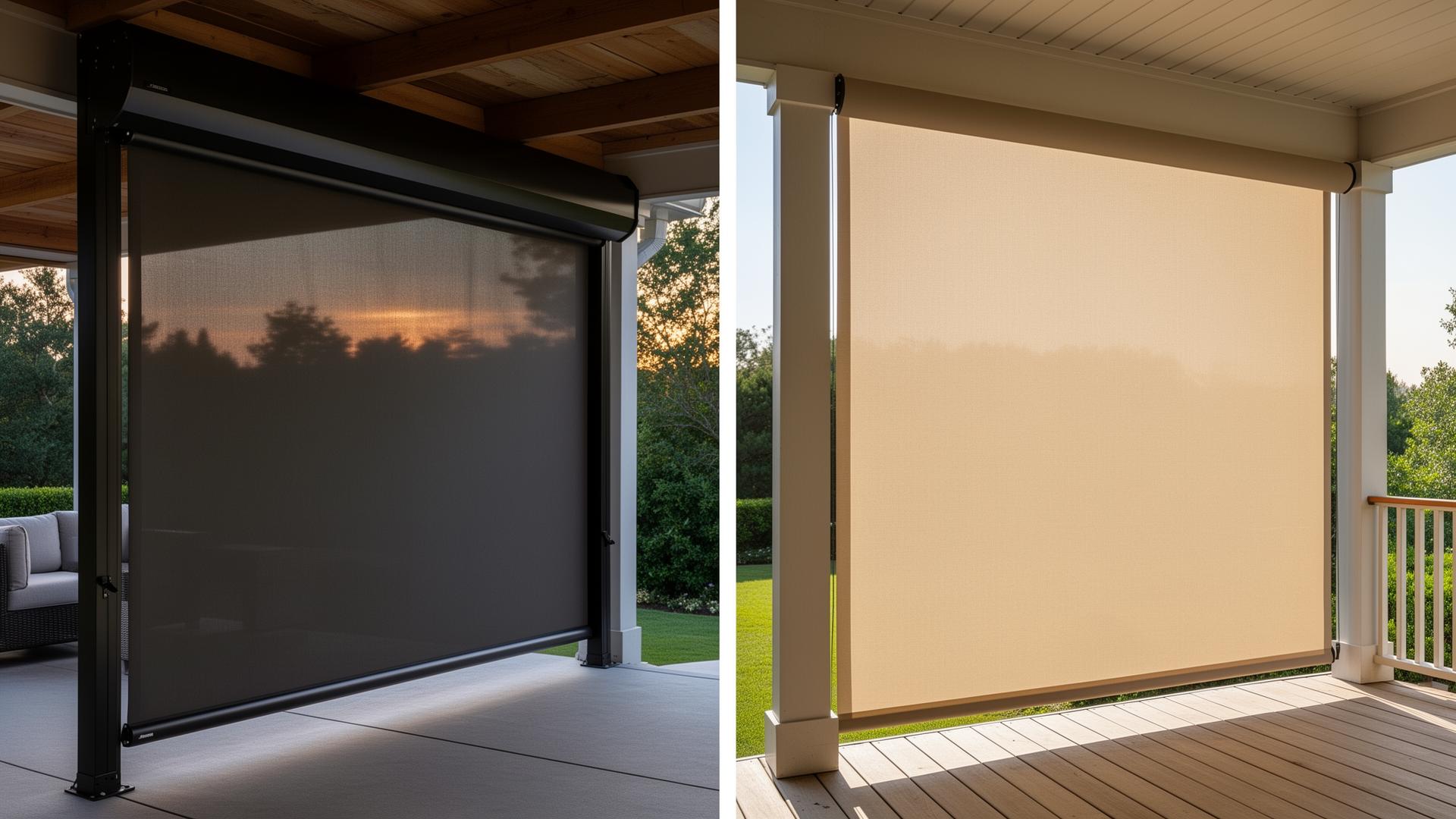
A patio screen has one job on the Gulf Coast: hold the line against sun, rain, wind, and mosquitoes long enough to make the patio usable. The two systems homeowners compare most are zip-track and manual roll-down screens. They look similar rolled up. In Houston weather, they perform very differently. Here is how to choose.
The Quick Answer
If your patio faces real Houston conditions — afternoon sun, Gulf gusts, and a long mosquito season — zip-track is the system built to handle them. Its fabric locks into side tracks, so it stays put in wind and seals out insects with no side gaps. A manual roll-down screen costs less upfront and works for a sheltered, low-wind spot where one-touch operation and a full seal are not priorities. Most Houston patios are not that sheltered.
How Each System Works
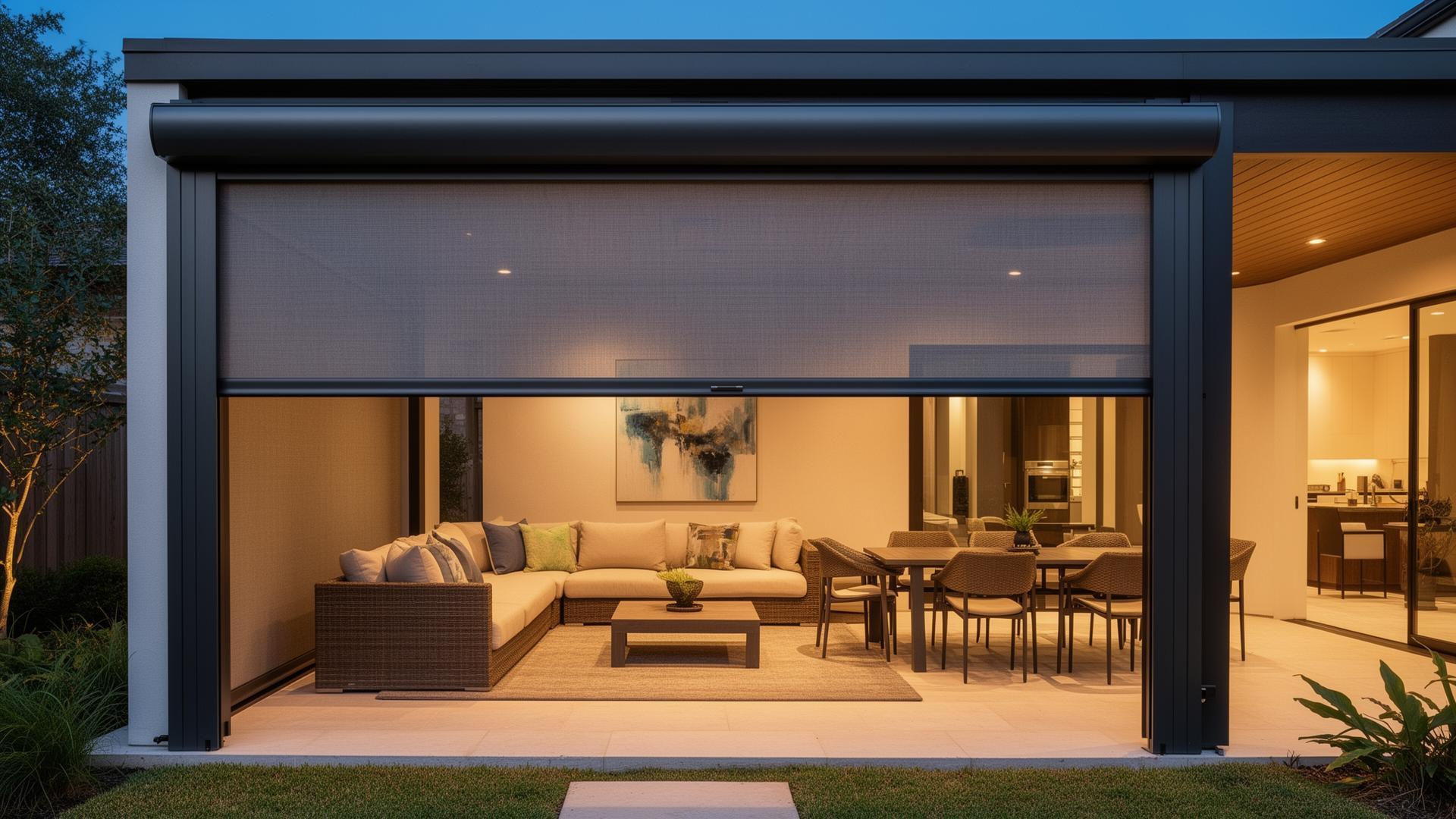
A zip-track screen has a continuous zipper or spline welded to each edge of the fabric. As the screen lowers, those edges lock into a track on both sides, holding the panel tight from top to bottom. Most are motorized and run on a remote, switch, or sun and wind sensor. Raised, the fabric disappears into a slim headbox.
A manual roll-down screen is a fabric panel on a spring or crank roller. It pulls down and latches at the bottom, but the side edges either run in a loose guide or hang free. There is no motor and no locking zipper, which keeps it simple and inexpensive — and also explains why it behaves differently when the weather turns.
Zip-Track vs Manual — Side by Side
| What matters on a Houston patio | Zip-Track | Manual Roll-Down |
|---|---|---|
| Holds firm in Gulf wind | Locked in track | Can billow / blow loose |
| Insect seal (no side gaps) | Full | Partial |
| Sheds rain when lowered | Yes | Limited |
| One-touch / sensor operation | Motorized | Hand-operated |
| Stays taut, resists wrinkling | Patented track | Sags over time |
| Spans wide openings | Yes | Width-limited |
| Lower upfront cost | Higher | Best |
Which One for a Houston Patio?
Three local realities usually settle the decision:
- Wind. Houston patios catch real gusts off open yards and approaching storms. A manual screen with unlocked edges can billow, pull from its guides, or flap loudly. A zip-track holds the fabric in its rails and stays quiet and flat.
- Mosquitoes. Houston's mosquito season runs much of the year. A full edge-to-edge seal is the difference between an evening on the patio and a retreat indoors. Zip-track seals the sides and bottom; manual screens often leave gaps.
- Sun and rain. Both block sun, but a tensioned zip-track sheds rain and resists sagging far better through Houston's heat-and-downpour cycle.
For a sheltered, wind-protected nook used occasionally, a manual screen can be enough. For a patio you want to use across the season — especially one paired with a premium aluminum pergola — the motorized zip-track system is the one that earns its place.
Which Should You Choose?
Reduced to a line: manual for a sheltered, budget-first spot; zip-track for a patio that has to stand up to Houston weather and get used. The upfront difference buys wind resistance, a true insect seal, one-touch operation, and a screen that stays taut for years instead of sagging.
Tell us your opening size, the direction it faces, and how you use the space, and we will recommend the right system — and handle it as part of a turnkey outdoor build. Call (832) 696-3407 or send your measurements to get started.
FAQ
Are zip-track patio screens worth the extra cost in Houston?
For most Houston patios, yes. Zip-track screens lock the fabric into side tracks, so they hold in Gulf wind, seal out mosquitoes, and stay taut for years. A manual screen costs less upfront but can billow in wind and leaves side gaps. The right choice depends on how exposed your patio is and how often you want to use it.
Do manual patio screens keep mosquitoes out?
Only partially. Manual roll-down screens usually leave gaps at the side edges where the fabric is not locked into a track. Zip-track screens seal the sides and bottom completely, which matters during Houston's long mosquito season.
Can a manual screen handle strong wind?
Not well. Without locked edges, a manual screen can billow, pull from its guides, or flap in a gust. Zip-track screens hold the fabric firmly in their rails, which is why they are the better fit for exposed Houston patios. Neither is a substitute for hurricane shutters or heavy-duty glass.
Which lasts longer?
Zip-track systems generally last longer because the fabric stays tensioned and tracks straight, resisting the sagging and wrinkling that wear out manual screens over time. Premium fabrics with high color fastness also resist fading in direct Houston sun.
Scope your Houston patio screen.
Send your opening size and a photo — we will recommend zip-track or manual and confirm lead time.